
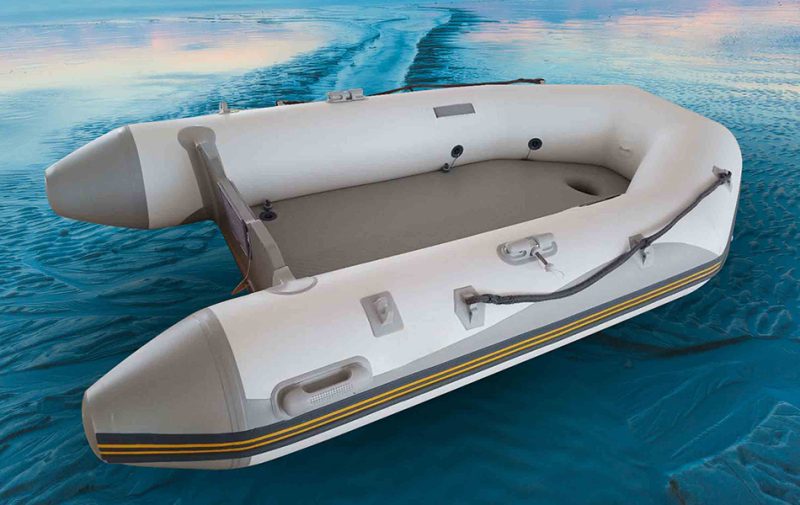
How Inflatable Boat Manufacturing Uses Cutting-Edge Technology for Fleet Durability
The global marine market demands unprecedented structural integrity, and elite inflatable boat manufacturing facilities are stepping up by replacing legacy manual glues with automated, molecular-grade technologies. For commercial fleet operators, water sports rental networks, and global distributors, the long-term durability of an inflatable craft directly influences operational ROI. By integrating state-of-the-art thermal fusion, CNC precision cutting, and composite engineering, a premium product line can withstand severe environmental stresses. This technical review explores how modern factory innovations eliminate seam failures and maximize equipment lifecycles.
The Evolution of Industrial Inflatable Integrity
Why are technological updates mandatory in 2026? Traditional cold-glued construction degrades when exposed to UV radiation, fuel spills, and winter temperature shifts. Modern inflatable boat manufacturing bridges this gap by deploying advanced multi-layer PVC fabrics and heavy-duty synthetic elastomers. These base substrates are coupled with computerized engineering to transform pliable textiles into ultra-rigid, puncture-resistant marine hulls capable of sustaining high internal pressures over multi-year cycles.
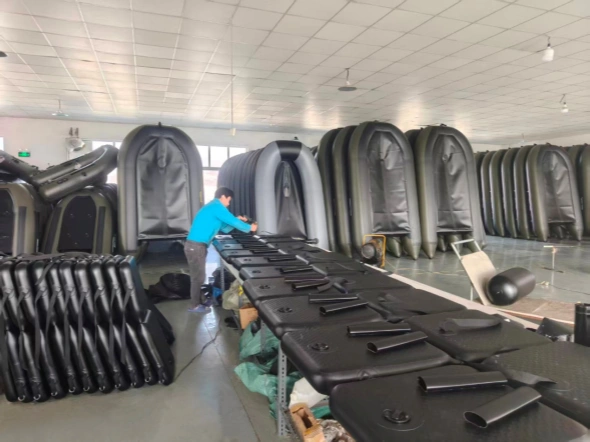
Heavy-Duty Marine Engineering: Advanced inflatable boat manufacturing processes provide premium rigid hulls that excel in extreme water fleet environments.
1. High-Frequency Thermal Bonding Technology
The primary point of failure on any inflatable craft has historically been its seams. To permanently solve this industry-wide pain point, leading-edge paddle board and boat facilities utilize automated high-frequency thermal bonding equipment.
This process completely avoids chemical adhesives by delivering a precise 200°C controlled heat application to the overlapping material layers. Under immense mechanical pressure, the polymers melt and interlock, achieving a flawless 5-layer PVC fusion strength that turns separate sheets into a single, cohesive unit. Because the process is entirely robotic, the machinery maintains a strict 0.02mm seam tolerance control, guaranteeing that weak spots or localized air bubbles are physically impossible.
2. Computerized Pattern Cutting Systems
Consistency is king in high-volume commercial production. Manual textile cutting introduces variations that weaken the final structural assembly. Modern factories combat this via high-capacity, digitized cutting tables:
| Equipment Type | Engineering Precision | Material Savings Rate |
|---|---|---|
| Laser Cutting Machines | ±0.15mm | 12% – 15% Reduction |
| Ultrasonic Cutters | ±0.3mm | 8% – 10% Reduction |
For our international wholesale and OEM brand partners, these digitized CNC workflows unlock major competitive advantages:
- 98% Material Utilization Rate: Computerized nesting software groups patterns perfectly, heavily reducing raw material waste and stabilizing wholesale unit pricing.
- 3D Digital Template Libraries: Facilitates rapid, localized design adjustments and ensures that subsequent bulk re-orders match initial engineering specs down to the millimeter.
3. Reinforced Seam Construction Methods
To engineer elite commercial craft that outlast standard industry baselines, advanced inflatable boat manufacturing plants build multi-layered security directly into high-stress connection vectors:
Proprietary 4-Step Overlap Bonding Process
Instead of simple edge-to-edge welding, seams are interlocked using an internal and external structural tape configuration, wrapping the core seam in four distinct protective layers to prevent sudden burst decompressions.
Kevlar-Reinforced Stress Points
D-rings, transom joints, and bow handles are fortified with ballistic Kevlar patch backings, dispersing focused tow and anchor pull forces across a broader surface area.
Extreme Hydrostatic Pressure Testing
Every batch undergoes rigid laboratory stress testing, holding inflated pressures up to 35 PSI—nearly double the standard operating limit—ensuring maximum field safety margins for clients.
Maximizing Asset Longevity for Commercial Networks
Procuring from a technologically advanced facility drastically reshapes a marine business’s balance sheet. When a brand scales its fleet using high-frequency welded craft, the incidence rate of slow leaks, warranty claims, and onsite repair shutdowns falls to near zero.
Whether you are managing a busy watercraft rental station at a luxury resort, stocking retail shelves for an international distribution brand, or deploying heavy-duty safety gear for first responders, selecting equipment backed by precision robotic manufacturing is the ultimate guarantee of long-term commercial performance.
Conclusion: Partnering with a Tech-Driven Marine Manufacturer
Ultimately, the strength, safety, and lifespan of an inflatable hull are determined by the factory machinery that seals it. Low-cost manual manufacturing centers simply cannot match the air retention and environmental resilience required for demanding commercial usage. To establish definitive market leadership and scale your brand securely, global importers must source directly from a premier, vertically integrated SUP and marine production line capable of executing flawless thermal bonds and high-precision composite cutting workflows.
Access Premium Industrial-Grade Manufacturing Specifications
Ready to optimize your product catalog with ultra-rigid, laser-cut commercial watercraft built for intense fleet wear? We provide state-of-the-art OEM/ODM production configurations, strict technical quality controls, and direct factory bulk wholesale pipelines.
Collaborate with our marine engineering group. Gain immediate access to direct wholesale pricing and technical construction blueprints via the link above.